
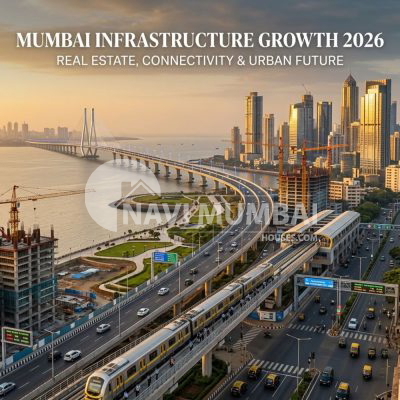
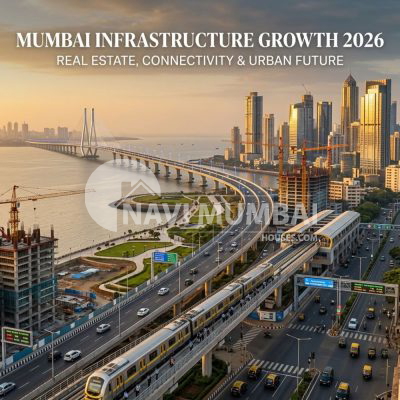
Mumbai infrastructure growth 2026 is changing how the city lives, travels, and invests. New metro lines, mega bridges, redevelopment projects, and airport expansion are reshaping Mumbai faster than ever before.
Mumbai is changing fast. Over the next ten years, the city will shape how India grows, builds, and invests. Because of this, Mumbai’s future will affect millions of people across the country.
This is not just another growth phase. Instead, it is a defining moment for the city.
Today, Mumbai is seeing major change. New metro lines are opening. Coastal roads are reducing travel time. Large redevelopment projects are replacing old buildings. At the same time, people still deal with traffic, crowded roads, and expensive housing every day.
Therefore, the next decade will be critical.
If Mumbai succeeds, it could become one of the world’s strongest urban economies. However, if planning fails, the city could face even more pressure in the future.
India cannot afford that.
Mumbai infrastructure growth 2026 is changing the future of real estate and urban development.
Mumbai Is Rebuilding Itself
For many years, Mumbai faced the same problems:
- Heavy traffic
- Limited land
- High property prices
- Old infrastructure
- Long travel times
Even then, the city remained India’s financial capital. People continued to move here because Mumbai offered jobs, business growth, and opportunity.
Now, things are finally improving.
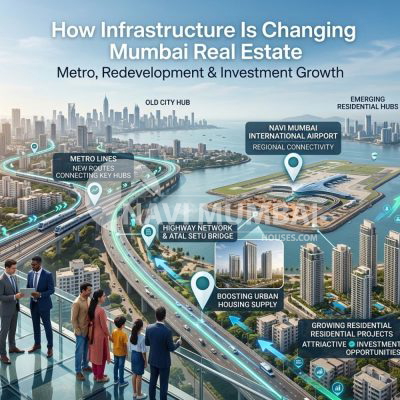
Several major projects are changing the city, including:
- Mumbai Coastal Road
- Mumbai Trans Harbour Link (Atal Setu)
- Navi Mumbai International Airport
- Metro expansion projects
- Eastern Freeway extensions
- Large redevelopment projects
Together, these projects are changing daily life. In addition, they are changing how people choose where to live.
Infrastructure Is Changing Real Estate Demand
Experts believe Mumbai infrastructure growth 2026 will improve connectivity across the region.
Earlier, location alone decided property value. Homes near business hubs or South Mumbai always carried premium prices.
Now, connectivity matters just as much.
When travel time drops, buyers become more flexible. As a result, many areas once seen as “far away” are now growing quickly.
For example, Navi Mumbai is attracting strong demand because of better infrastructure. The upcoming airport, Atal Setu, and stronger transport links are improving buyer confidence.
At the same time, many professionals now prefer:
- Bigger homes
- Better amenities
- More open space
- Less congestion
- Better work-life balance
Because of these changes, growth is spreading beyond traditional parts of Mumbai.
Why This Decade Matters
India is urbanizing quickly. In the coming years, millions of people will move toward large cities for jobs and better opportunities.
However, buyers today expect more from a city.
People now want:
- Better roads
- Faster transport
- Open spaces
- Good planning
- Safety
- Lifestyle convenience
Therefore, Mumbai faces a major challenge.
The city must grow without becoming harder to live in.
That balance will decide Mumbai’s future.
Redevelopment Is Reshaping the City
One of the biggest changes in Mumbai is redevelopment.
Across the city, old buildings are being replaced with modern towers. Because of this, redevelopment has become a major part of the real estate market.
Important redevelopment zones include:
- Bandra
- Andheri
- Chembur
- Dadar
- Ghatkopar
- Mulund
- Thane
For residents, redevelopment often brings:
- Better amenities
- Safer homes
- Modern layouts
- Higher property value
Meanwhile, developers see these projects as long-term growth opportunities.
In addition, buyers today prefer modern homes with better facilities. Therefore, demand for redevelopment projects continues to rise.
Luxury Housing Is Still Growing
Despite rising prices, Mumbai’s luxury market remains strong.
Business owners, NRIs, celebrities, and wealthy professionals continue to buy premium homes. Many of them see luxury real estate as both a lifestyle upgrade and a long-term investment.
Today’s luxury buyers want:
- Sea views
- Smart-home features
- Wellness spaces
- Privacy
- Premium living communities
As expectations rise, developers are improving design quality and lifestyle features.
Because of this, the luxury segment continues to perform well.
The Middle-Class Housing Problem Is Growing
While luxury housing grows, middle-income buyers face increasing pressure.
In many parts of Mumbai, even people with good salaries struggle to buy quality homes. Rising land prices and construction costs have made ownership difficult.
As a result, many buyers are moving toward nearby growth areas such as:
- Navi Mumbai
- Panvel
- Kharghar
- Ulwe
- Thane
These locations offer:
- Better affordability
- Larger homes
- Future growth potential
- Better lifestyle options
This is why transport projects matter so much.
When connectivity improves, people can live farther away without losing convenience. Therefore, infrastructure directly affects affordability and quality of life.
According to recent updates from MMRDA, multiple metro and road projects are expected to improve regional connectivity over the next few years.
Mumbai Must Protect Its Identity
Mumbai has always been more than a business city.
For decades, it represented ambition, hope, and opportunity. Millions came here to build a better future.
That emotional connection still exists today.
However, the city now faces an important question.
Can Mumbai modernize without losing its identity?
This matters because roads and towers alone do not create a world-class city. Good planning matters equally.
Today, buyers care more about:
- Flood risks
- Air quality
- Open spaces
- Sustainability
- Public transport access
As a result, future development will shape both the city’s image and daily life.
Why Investors Still Trust Mumbai
Despite its challenges, Mumbai continues to attract strong investor confidence.
There are several reasons for this.
Economic Strength
Mumbai remains India’s financial center. It is home to:
- Major banks
- Corporate headquarters
- Financial firms
- Media companies
- Startup ecosystems
Because of this economic strength, long-term property demand remains stable.
Infrastructure-Led Growth
Historically, infrastructure projects have increased property values.
When metro lines, roads, or airports improve connectivity, nearby areas often grow faster.
Therefore, investors are closely watching:
- Airport zones
- Metro corridors
- Redevelopment clusters
- Emerging business districts
For many investors, timing matters. Buying early in a growth cycle can create strong long-term returns.
NRI Interest Is Rising Again
NRIs are also showing fresh interest in Mumbai real estate.
Better regulations, RERA transparency, and major infrastructure projects are improving confidence among overseas buyers.
At the same time, buyers are becoming more careful.
Today, they focus on:
- Trusted developers
- Legal clarity
- Construction quality
- Future connectivity
- Long-term appreciation
Because of this, expert guidance and proper research are becoming more important.
Mumbai’s Future Depends on Smart Execution
The next ten years will decide Mumbai’s future.
The city already has major advantages:
- Strong economic activity
- Global investor interest
- High housing demand
- Massive infrastructure investment
However, serious challenges still remain.
Issues like affordability, overcrowding, flooding, and traffic must be handled carefully. Otherwise, growth could become difficult to manage.
Mumbai does not only need more buildings. Instead, it needs:
- Better planning
- Smarter transport
- Sustainable growth
- Improved livability
- Balanced development
If these goals are achieved, Mumbai could become one of the world’s strongest urban economies.
Final Thoughts
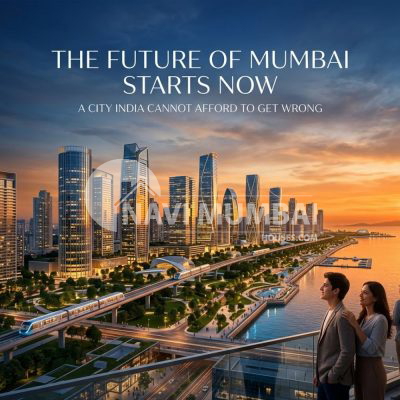
Mumbai is standing at a historic moment.
The city is not only building roads, bridges, and towers. Instead, it is rebuilding its future identity.
For investors, developers, and homebuyers, this decade offers major opportunity. At the same time, it also demands smarter decisions and long-term thinking.
The best investments will not come from blindly following trends. Instead, they will come from understanding where infrastructure, lifestyle, and future growth connect.
Mumbai’s defining decade has already started.
The post Mumbai Infrastructure Growth 2026: Real Estate & Urban Future appeared first on .