
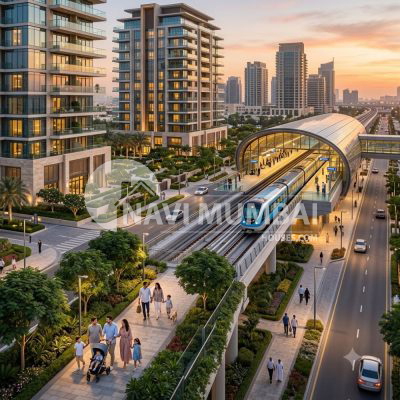
Infrastructure has always been one of the biggest drivers of property appreciation. Today, Navi Mumbai is once again at the center of a major transformation. With the upcoming Navi Mumbai Metro Phase 2, connectivity across key residential and commercial hubs is expected to improve significantly. As a result, areas such as Taloja, Kalamboli, Kamothe, Khandeshwar, and the Navi Mumbai International Airport region are attracting growing attention from homebuyers and investors alike.
From an investor’s perspective, this metro project is much more than a transportation upgrade. Instead, it represents a long-term opportunity that could positively influence property values, rental demand, and commercial growth. Therefore, understanding the proposed route, construction timeline, and expected impact can help investors make informed decisions.
If you’re planning to invest in the region, don’t miss our Navi Mumbai Property Guide for a detailed overview of the city’s fastest-growing locations.
What is Navi Mumbai Metro Phase 2?
To begin with, Navi Mumbai Metro Phase 2 is the next major expansion of the city’s metro network. Specifically, the corridor has been planned to improve connectivity between rapidly developing residential areas and important business hubs. Moreover, it is expected to integrate with the existing Metro Line 1, creating a more seamless public transport network.
In addition, the metro corridor will support the region’s growing population and improve access to the upcoming Navi Mumbai International Airport. Consequently, daily commuting is expected to become faster and more convenient for thousands of residents.
For the latest infrastructure updates, investors can also refer to the CIDCO Official Website.
Proposed Route & Stations
Connecting Taloja MIDC to Khandeshwar, the Phase 2 metro corridor will pass through several rapidly developing residential and industrial areas. Throughout this route, commuters will gain access to key neighborhoods experiencing steady population growth and increasing real estate activity. For residents and investors alike, the improved connectivity is expected to reduce travel time while supporting long-term urban development.
Proposed Stations
The proposed stations along the corridor include:
- MIDC Station 2
- MIDC Station 1
- Kasadi
-
Or, for an even cleaner and more professional format:
Area Station Kalamboli Sector 7 Kalamboli Sector 13 Kalamboli Sector 2E Kamothe Sector 10 - Khandeshwar
Beyond the initial corridor, future metro extensions are expected to improve connectivity to the Navi Mumbai International Airport and other emerging growth corridors. Ultimately, a larger metro network could enhance accessibility, encourage economic activity, and further strengthen the region’s real estate potential.
Construction Timeline
Initially, the project was proposed as part of Navi Mumbai’s long-term transport vision.
Subsequently, planning, feasibility studies, and route evaluations were carried out.
More recently, financial approvals have helped move the project forward.
Meanwhile, detailed planning, land acquisition, and tendering activities are progressing in phases.
Ultimately, the operational timeline will depend on construction progress, regulatory approvals, and project execution.
Areas Expected to Benefit
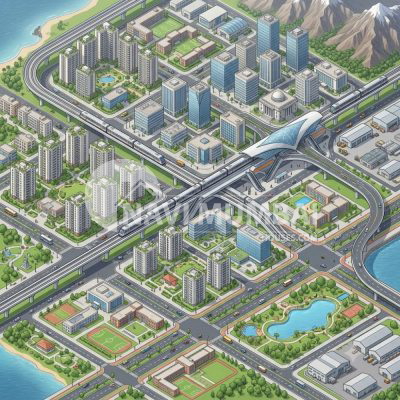
1. Kamothe
Kamothe has already become one of Navi Mumbai’s preferred residential destinations due to its strategic location.
Furthermore, metro connectivity is expected to reduce travel time considerably.
As a result, rental demand could increase, while long-term capital appreciation may also improve.
2. Kalamboli
Kalamboli enjoys excellent connectivity through major highways and logistics corridors.
In addition, the upcoming metro is likely to improve access to nearby employment hubs.
Consequently, both residential and commercial developments may witness higher demand over the coming years.
3. Taloja
Taloja continues to attract first-time homebuyers because of its comparatively affordable property prices.
At the same time, improved metro connectivity is expected to make daily commuting much easier.
Therefore, buyer confidence could strengthen, encouraging further residential development and investment.
4. Khandeshwar
Khandeshwar already benefits from suburban railway connectivity.
Moreover, the proposed metro station could transform it into an important multi-modal transport hub.
As a result, nearby residential and commercial properties may become increasingly attractive to buyers and tenants.
How Metro Connectivity Can Influence Property Prices
Across many Indian cities, metro infrastructure has played an important role in shaping real estate markets.
For example, improved connectivity often makes neighborhoods more attractive to both homebuyers and businesses.
Consequently, residential demand, rental occupancy, and commercial activity frequently increase.
In addition, better accessibility can encourage new retail developments, educational institutions, and healthcare facilities.
However, investors should remember that metro connectivity is only one factor affecting property appreciation. Equally important are the developer’s reputation, project quality, local demand, and overall market conditions.
Investment Opportunities
From an investment standpoint, Navi Mumbai Metro Phase 2 presents opportunities across multiple property segments.
Under-Construction Projects
Firstly, properties under construction often offer lower entry prices.
Additionally, they may benefit from appreciation as infrastructure projects progress.
Ready-to-Move Homes
On the other hand, ready-to-move properties can generate immediate rental income.
Meanwhile, investors can also benefit from future infrastructure-led appreciation.
Commercial Properties
Similarly, commercial spaces located near metro stations often experience higher footfall after metro operations begin.
Therefore, retail shops and office spaces may become attractive long-term investments.
Things Every Investor Should Check
Before making any investment decision, it is important to complete proper due diligence.
Specifically, investors should:
- Verify the project’s RERA registration.
- Review the developer’s track record.
- Confirm the property’s distance from the proposed metro station.
- Study future infrastructure plans in the surrounding area.
- Evaluate current rental demand and occupancy levels.
- Compare pricing with nearby projects.
Most importantly, avoid investing solely because of a proposed metro line. Instead, choose projects that offer strong fundamentals and long-term growth potential.
Before investing, always verify a project’s registration on the MahaRERA Portal.
Why This Metro Project Matters
Navi Mumbai Metro Phase 2 is not an isolated infrastructure project.
Rather, it complements several transformative developments, including:
- Navi Mumbai International Airport
- Atal Setu (Mumbai Trans Harbour Link)
- Upcoming logistics and business hubs
- Improved highway and road infrastructure
Together, these projects are expected to improve regional connectivity, attract businesses, and strengthen Navi Mumbai’s position as one of India’s fastest-growing real estate markets.
The metro project complements the development of the Navi Mumbai International Airport, one of India’s largest upcoming airport projects.
Final Thoughts
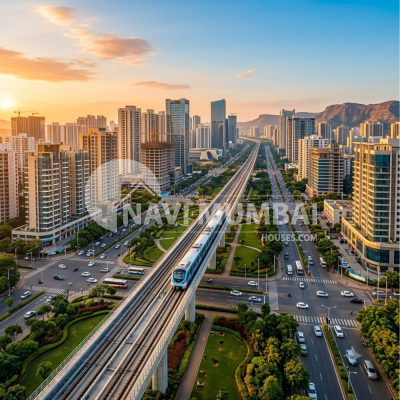
Overall, Navi Mumbai Metro Phase 2 has the potential to become one of the region’s most influential infrastructure projects.
Moreover, it is expected to improve connectivity among key residential and commercial areas while supporting long-term urban development.
For investors, this creates an opportunity to identify promising locations before infrastructure reaches full maturity.
Nevertheless, successful real estate investing always requires careful research and a long-term perspective.
Ultimately, buyers who focus on quality developments, strategic locations, and sound investment fundamentals are likely to be in a stronger position to benefit from Navi Mumbai’s future growth.
The post Navi Mumbai Metro Phase 2: Stations & Property Impact appeared first on .