
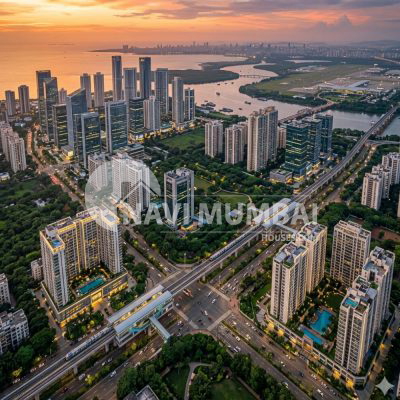
Navi Mumbai homes 2026 are becoming the top choice for homebuyers across the Mumbai Metropolitan Region. With massive infrastructure growth, the upcoming Navi Mumbai International Airport, better connectivity, and modern residential developments, Navi Mumbai is rapidly transforming into the best place to buy a home in 2026. Moreover, buyers are now prioritizing larger spaces, improved lifestyle, and long-term investment security — all of which Navi Mumbai delivers exceptionally well.
From world-class infrastructure and rising employment hubs to cleaner urban planning and stronger appreciation potential, Navi Mumbai offers something increasingly rare in Indian real estate: balance.
Buyers today want affordability without sacrificing lifestyle quality. At the same time, they expect strong connectivity along with peaceful living environments. Most importantly, they are searching for a city that offers both future growth potential and comfortable day-to-day living.
For first-time buyers, investors, NRIs, and families looking for long-term stability, Navi Mumbai has quietly become a once-in-a-decade opportunity.
Here are 10 powerful reasons why Navi Mumbai stands out as the best place to buy a home in the Mumbai Metropolitan Region in 2026.
1. The Upcoming Navi Mumbai International Airport Is Transforming the Entire Region
Few infrastructure projects in India have changed real estate sentiment as dramatically as the upcoming Navi Mumbai International Airport.
This is not just an airport. Instead, it is an economic catalyst capable of reshaping the entire region.
Areas like Ulwe, Pushpak Nagar, Dronagiri, Panvel, and Kharghar are witnessing accelerated demand because buyers understand what usually happens around major global airports: property values rise, commercial activity expands, and entire micro-markets evolve.
In most cities, investors enter after prices explode. In Navi Mumbai, however, many buyers are still entering before the full transformation peaks.
That timing matters enormously.
According to infrastructure updates published by CIDCO, Navi Mumbai continues to witness large-scale connectivity and urban development projects.
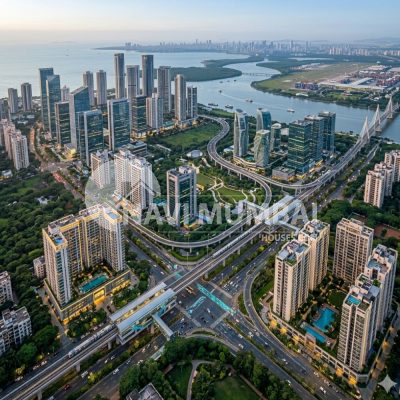
2. Infrastructure Development Here Is Years Ahead of Other MMR Regions
Unlike many overcrowded urban zones where infrastructure struggles to keep pace with population growth, Navi Mumbai was planned with expansion in mind.
Wide roads, organized sectors, better drainage systems, open spaces, and integrated urban planning make a visible difference the moment you enter the city.
Moreover, projects like:
- Mumbai Trans Harbour Link
- Navi Mumbai Metro
- Palm Beach Road expansion
- Coastal connectivity corridors
- Upcoming multimodal transport hubs
are reshaping travel across the MMR region.
As a result, homebuyers benefit from less stress, lower commute fatigue, and stronger future appreciation potential.
Recent transport developments highlighted by MMRDA are expected to strengthen connectivity across the Mumbai Metropolitan Region.
3. Property Prices Still Offer Strong Value Compared to Mumbai
One of the biggest mistakes buyers make is assuming affordability means compromise.
In Navi Mumbai, affordability often means smarter entry timing.
For example, a premium apartment in areas like Kharghar, Taloja, Ulwe, or Panvel can still cost significantly less than similar-sized homes in Mumbai suburbs such as Andheri, Powai, or Lower Parel. At the same time, buyers receive newer construction, better amenities, and larger living spaces.
For young families especially, this matters emotionally and financially.
Rather than stretching budgets dangerously thin for cramped spaces in older buildings, buyers in Navi Mumbai can secure larger homes with modern amenities and long-term upside.
In 2026, space is no longer a luxury — it is a lifestyle necessity.
4. Navi Mumbai Is Emerging as a Massive Employment Hub
Real estate growth becomes sustainable only when jobs follow infrastructure.
Fortunately, that is exactly what is happening in Navi Mumbai.
The region is witnessing growth across:
- IT and tech parks
- Logistics and warehousing
- Corporate offices
- Data centers
- Manufacturing corridors
- Port-linked businesses
Locations around Airoli, Belapur, Ghansoli, and Juinagar are already established commercial zones, while Panvel and Ulwe are evolving rapidly due to airport-driven demand.
Consequently, residents can live closer to work instead of spending hours trapped in traffic.
For investors, employment growth also strengthens rental demand, which remains one of the most important indicators of long-term market health.
Airport-related progress and infrastructure expansion updates are also regularly published on Navi Mumbai International Airport.
5. Better Quality of Life Compared to Congested Mumbai Zones
This is one of the biggest reasons buyers emotionally connect with Navi Mumbai after visiting once.
The difference feels immediate.
Cleaner roads immediately create a calmer urban experience. In addition, the city offers significantly more greenery and open spaces compared to many crowded Mumbai suburbs. Instead of constant congestion and noise, residents enjoy more breathable neighborhoods and better-planned infrastructure. As a result, everyday living feels less stressful and far more balanced for families and working professionals alike.
Areas such as Kharghar, Nerul, and Seawoods offer a lifestyle that feels significantly calmer than densely packed parts of Mumbai.
Furthermore, families increasingly prioritize mental comfort, open spaces, children-friendly environments, and reduced commute exhaustion.
Navi Mumbai delivers all four.
That emotional shift is driving genuine demand — not speculative hype.
6. Navi Mumbai Offers Exceptional Investment Appreciation Potential
Every major real estate boom follows a familiar pattern:
- Infrastructure announcement
- Early skepticism
- Gradual migration
- Commercial growth
- Price acceleration
Currently, Navi Mumbai is transitioning between stages four and five in several micro-markets.
Smart investors are closely watching regions like:
- Ulwe
- Panvel
- Taloja
- Dronagiri
- Kharghar
- Pushpak Nagar
because the combination of airport connectivity, metro expansion, and improving social infrastructure creates strong long-term capital appreciation potential.
In real estate, the biggest profits are usually made before mass realization happens — not after.
7. The Rise of Lifestyle Projects and Modern Communities
Homebuyers in 2026 are not just purchasing square footage.
Instead, they are buying experiences.
Developers across Navi Mumbai now offer integrated lifestyle projects with:
- Clubhouses
- Swimming pools
- Sky lounges
- Co-working spaces
- Smart security systems
- Wellness zones
- Landscaped gardens
- Children’s activity areas
Because of this evolution, buyer perception has changed entirely.
Earlier, premium lifestyle projects were concentrated mainly in South Mumbai or select western suburbs. Today, however, Navi Mumbai offers comparable experiences at significantly better value.
This is especially attractive to millennials, professionals, and NRIs looking for future-ready homes.
8. Connectivity to Mumbai Has Improved Dramatically
A few years ago, one of the biggest concerns buyers had about Navi Mumbai was accessibility.
Today, that concern is fading rapidly.
The Mumbai Trans Harbour Link has significantly improved connectivity between Mumbai and Navi Mumbai, thereby reducing travel time and psychologically bringing the regions closer together.
Meanwhile:
- Suburban railway connectivity remains strong
- Metro connectivity is expanding
- Road infrastructure continues improving
- Airport access will redefine regional mobility
Consequently, buyers can enjoy better living conditions without disconnecting from Mumbai’s economic ecosystem.
9. Navi Mumbai Is Becoming an NRI and Investor Hotspot
NRIs and seasoned investors tend to identify structural growth opportunities earlier than the average retail buyer.
That is precisely why Navi Mumbai is receiving increasing attention from global Indian investors.
The reasons are clear:
- Strong infrastructure pipeline
- Lower entry prices compared to Mumbai
- High future appreciation potential
- Growing rental demand
- Better planned urban development
Many investors now view Navi Mumbai similarly to how Gurgaon evolved near Delhi or how Thane transformed over the past decade.
The difference, however, is that Navi Mumbai still has multiple growth corridors that are relatively early in their lifecycle.
That investment window will not remain open forever.
10. Navi Mumbai Still Has “Future City” Energy
Perhaps the biggest reason Navi Mumbai stands apart in 2026 is psychological.
When buyers invest here, they feel they are entering a city that is still expanding upward — not one struggling under the weight of outdated infrastructure.
There is visible momentum everywhere.
Across Navi Mumbai, new roads and infrastructure corridors are steadily transforming connectivity. At the same time, premium residential and mixed-use projects continue entering the market. Moreover, commercial activity is expanding rapidly as businesses move toward emerging growth hubs. Social infrastructure, including schools, hospitals, and retail zones, is also improving consistently. Consequently, buyer demand continues to strengthen across multiple micro-markets.
That optimism matters deeply.
People no longer want only homes. Instead, they want confidence in the future of the city they choose.
Navi Mumbai gives them that confidence.
Common Concerns Buyers Still Have – And Why They’re Changing
“Will Navi Mumbai really match Mumbai’s growth?”
In many ways, it already has in terms of infrastructure quality and planned urban development. In fact, several sectors now offer superior living conditions compared to older Mumbai neighborhoods.
“Is this the right time to buy?”
Historically, buyers benefit most before full infrastructure maturity is priced in. Since airport completion, metro expansion, and connectivity upgrades are progressing rapidly, many experts believe Navi Mumbai is still in a strong growth cycle.
“Will rental demand remain strong?”
Yes — especially near commercial hubs, transit corridors, and airport-influenced zones. Additionally, professionals increasingly prefer well-planned locations with better quality of life.
The Emotional Reality Behind Buying in Navi Mumbai
For many buyers, purchasing a home is not only about ROI.
More importantly, it is about relief.
For some families, the biggest benefit is escaping overcrowded neighborhoods and constant congestion. Others value shorter commutes and the ability to spend more quality time at home. Many buyers also appreciate avoiding overpriced, outdated apartments that offer limited lifestyle upgrades. Above all, people want confidence that the city they invest in today will continue growing in the future.
Navi Mumbai represents something deeply aspirational for modern Indian families: the possibility of upgrading life without sacrificing financial stability.
Ultimately, that combination is incredibly powerful.
Final Thoughts
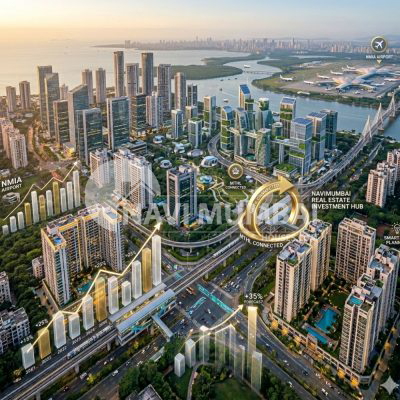
The Mumbai Metropolitan Region is evolving rapidly, but very few locations offer the complete package that Navi Mumbai does in 2026.
It combines:
- Infrastructure-led growth
- Lifestyle improvement
- Long-term appreciation potential
- Better planning
- Strong connectivity
- Future economic expansion
Most importantly, it still offers opportunity before saturation fully sets in.
Years from now, many buyers may look back at this phase as the period when Navi Mumbai transitioned from a smart alternative into the primary residential powerhouse of the MMR region.
And those who entered early may benefit the most.
If you’re comparing locations before investing, also read our detailed guide on Vashi vs Nerul vs Belapur: Which is Better for Homebuyers in 2026?
The post Why Navi Mumbai Homes 2026 Are the Best Investment Choice appeared first on .